

Nortdesigns
Industries

Deep context in the sectors we serve

We bring pattern recognition from hundreds of engagements so you skip the expensive learning curve.

Industries we serve

Industry Expertise

Deep specialization beats generalist guesswork

Healthcare

Compliant patient-facing platforms that reduce administrative load and increase continuity of care.

  • Telehealth
  • EHR/EMR Integration
  • Patient Portals
  • HIPAA Compliant
Get in touch
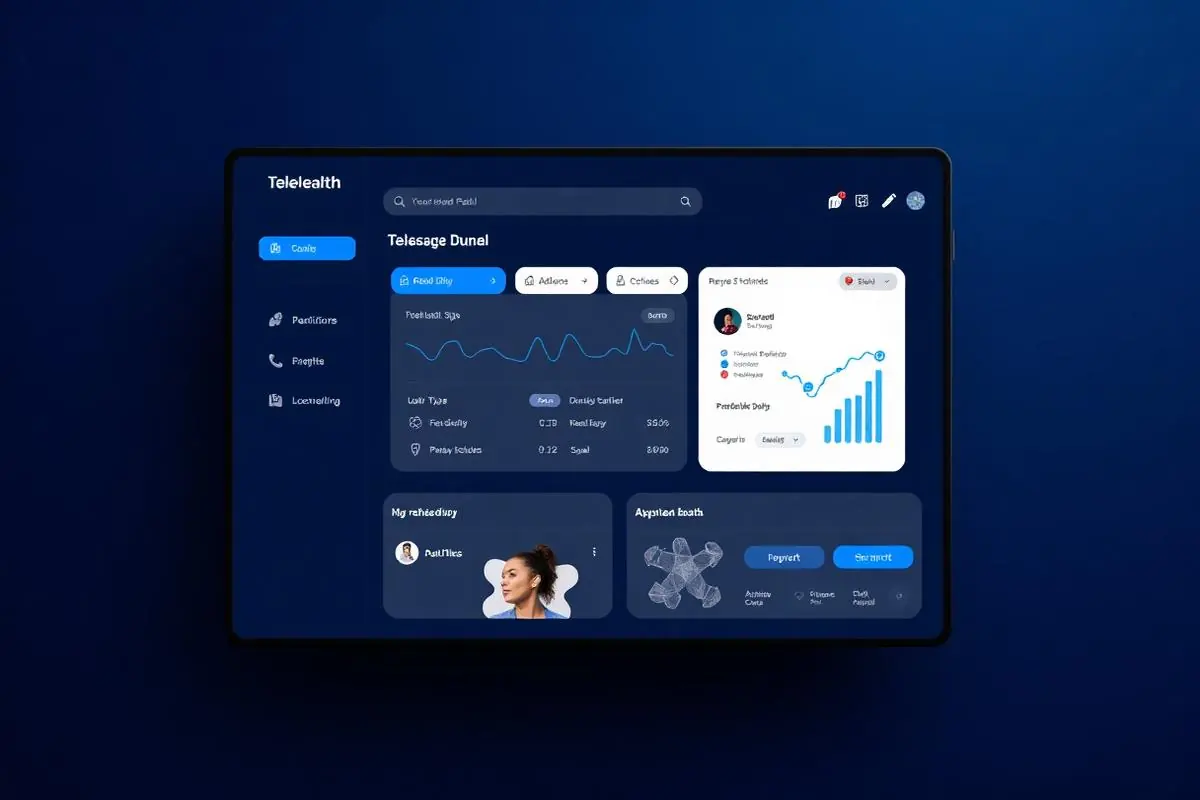
Healthcare work sample by Nortdesigns
Sector Knowledge

Why Industry Context Changes Almost Every Digital Decision

There is a version of digital work that treats every client identically: same discovery template, same wireframes, same content calendar, different logo. It is efficient for the agency and mediocre for the client. The reality is that the constraints, buying behaviour, regulatory environment and competitive dynamics of a sector reshape nearly every meaningful decision, from information architecture to how quickly a lead must be contacted.

This page sets out how we think about the industries we serve most often, what tends to be true within each, and where the expensive mistakes usually happen. It is not exhaustive, and we work outside these verticals regularly, but the patterns below are the ones we have paid to learn.

Healthcare and telehealth

Healthcare digital work sits at the intersection of anxiety and regulation. Patients arrive worried, often on mobile, frequently outside business hours, and they abandon at the first sign of friction or the first hint that their information is not being handled carefully. Meanwhile the organisation carries obligations around privacy, accessibility, advertising claims and record handling that constrain what marketing teams can do.

The practical consequences are specific. Booking flows must ask for the minimum information required to confirm an appointment, with everything else collected later. Provider credentials, locations and insurance acceptance need to be findable in seconds. Analytics must be configured so that no protected information leaks into third-party tools, which means rethinking the default installation of most advertising pixels.

Accessibility is non-negotiable in this sector. A significant proportion of patients use assistive technology, have low vision, or are navigating in circumstances of stress and distraction. Building to recognised accessibility standards is both an ethical baseline and a measurable conversion improvement.

The highest-return investments we see in healthcare are almost always operational rather than promotional: reducing no-shows through better reminders, cutting call volume through self-service, and shortening the path from symptom search to booked appointment.

  • Privacy-conscious analytics configured before any campaign launches
  • Short booking flows with progressive information capture
  • Provider, location and insurance data structured for search
  • Accessibility conformance treated as a launch requirement
  • Reminder and follow-up automation to reduce no-shows

Retail and e-commerce

E-commerce is the most measurable sector we work in, which makes it both the most rewarding and the least forgiving. Every friction point has a price attached, and that price is visible weekly. The businesses that win are rarely those with the most beautiful storefront; they are the ones with the clearest product information, the fastest pages, the most honest shipping economics and the best post-purchase experience.

Search and navigation deserve disproportionate attention. On catalogues beyond a few hundred products, on-site search becomes the primary interface, and default search implementations handle real-world queries badly. Synonyms, misspellings, attribute filtering and sensible empty-state behaviour routinely produce larger conversion gains than a homepage redesign.

Retention is where margin actually lives. Acquisition costs have risen across every paid channel, so the businesses growing profitably are those with a second and third purchase strategy: lifecycle email, replenishment timing, loyalty mechanics that are genuinely valuable rather than performative, and customer service that resolves rather than deflects.

For retailers with physical locations, the digital and in-store experiences must be treated as one system. Accurate local inventory, click-and-collect that actually works, and location pages that reflect real opening hours are the unglamorous foundations of omnichannel performance.

Education and edtech

Education buyers are rarely the end users, and the end users are rarely paying. That separation shapes everything. A parent, a school administrator and a student each need different evidence to say yes, and a site that speaks to only one of them will stall in the middle of the funnel.

Institutional buyers need procurement-grade material: accessibility documentation, security posture summaries, data-handling explanations, pricing structures that fit budget cycles, and evidence of outcomes. Providing these proactively shortens sales cycles substantially and signals maturity to committees that are risk-averse by design.

Consumer-facing edtech is a different game entirely, governed by activation and habit formation. The metric that matters is not sign-up but the completion of a first meaningful learning action and the return visit that follows. Visible progress, achievable session lengths and gentle re-engagement do more for retention than any onboarding tour.

Seasonality is severe in this sector. Planning content and campaign calendars around academic cycles, rather than around the agency's reporting calendar, is one of the simplest ways to improve return on spend.

  • Distinct journeys for learners, parents and institutional buyers
  • Procurement, accessibility and security documentation ready to send
  • Activation and week-one retention measured as primary metrics
  • Content and media calendars aligned to academic seasonality
  • Evidence of learning outcomes presented credibly

Technology and SaaS

Software buyers self-educate. By the time they contact you, they have read comparisons, watched a demo video from a competitor, asked a peer community, and formed an opinion. Your marketing site's job is to be present and persuasive during that research, not merely to capture a form fill at the end of it.

That means investing in the pages most agencies deprioritise: integration pages, comparison pages, security and compliance pages, pricing transparency, and documentation. These pages attract high-intent traffic, answer the questions that stall deals, and are frequently cited by AI answer engines, which increasingly mediate the research phase.

Positioning is the other lever. In crowded categories, the differentiator is rarely a feature; it is a clearly articulated point of view about who the product is for and what problem it refuses to solve. Sharpening that message often lifts conversion more than a full redesign, and it costs considerably less.

Finally, product-led and sales-led motions require different infrastructure. We help teams decide which they are actually running, then build the tracking, lifecycle messaging and hand-off logic to support it rather than a hybrid that serves neither well.

Professional services

For accountants, consultants, law firms, agencies and specialist advisors, the product is judgement, and judgement can only be demonstrated. This is why thought leadership works so well in professional services and so poorly when it is outsourced to writers with no domain expertise. The market can tell the difference immediately.

Our approach here is to extract expertise from the practitioners efficiently rather than to invent it. Short recorded conversations become detailed articles. Recurring client questions become resource pages. Anonymous engagement summaries become credibility assets. The partner spends thirty minutes; the firm gets a month of substantive content that sounds like them because it is them.

Local and category search remains decisive for many firms. Consistent business listings, service-area pages with genuinely distinct content, and steady review generation determine who appears when somebody is ready to engage. These fundamentals are frequently ignored in favour of flashier work, which is precisely why they remain available as an advantage.

Speed of response then converts the opportunity. Enquiries contacted within minutes convert dramatically better than those contacted the next day, so we usually recommend investing in follow-up infrastructure before increasing spend on generating more enquiries.

  • Expertise extracted from practitioners, not invented by ghostwriters
  • Local search fundamentals maintained rigorously
  • Review generation built into the client lifecycle
  • Rapid enquiry response infrastructure before more lead volume
  • Credibility assets: engagement summaries, credentials, speaking

Logistics, manufacturing and industrial businesses

Industrial and logistics companies often have the strongest fundamentals and the weakest digital presence. Long relationships, technical products, complex specifications and buyers who know exactly what they need. The opportunity is rarely brand building; it is making a deep catalogue of capability findable, comparable and quotable.

Specification-level content performs remarkably well here because the searches are precise and the competition is thin. Part numbers, tolerances, materials, compliance certifications and application guides attract exactly the buyer you want. A well-structured technical resource library can outperform years of general marketing.

Quoting and enquiry workflows are the second opportunity. Replacing a generic contact form with a structured request that captures the information your estimating team actually needs shortens turnaround, improves win rates and reduces internal frustration. These are process improvements delivered through digital tools rather than marketing campaigns, and they frequently produce the clearest return of any work we do.

If your industry is not listed here

The verticals above are where we hold the deepest pattern library, but the method transfers. We start every engagement by learning how buying actually happens in your market: who is involved, what triggers a search, what objections stall a decision, what alternatives exist including doing nothing, and what evidence changes a mind. That research is the same regardless of sector; only the answers differ.

What you should require from any partner is evidence that they have done this thinking rather than reached for a template. Ask them to explain your customer's decision process back to you before they propose a solution. It is a short conversation and it is remarkably revealing.

Book a consultation call and we will spend that first conversation on your market rather than on our portfolio. You will get a clear view of where we think the opportunity sits, and an honest assessment if we are not the right fit for it.

Hospitality, travel and experience businesses

Businesses that sell experiences face a distinct challenge: the product cannot be inspected before purchase, so every decision rests on anticipation and trust. Photography, review credibility, clear cancellation terms and availability transparency carry more weight here than in almost any other category.

Booking friction is the recurring problem we are called in to solve. Multi-step reservation flows that lose availability state, mobile date pickers that fight the user, hidden fees revealed at the final step and confirmation emails that answer none of the practical questions guests actually have. Each of these has a direct, measurable cost.

Seasonality and yield add a strategic layer. Marketing spend should follow the shape of demand rather than a flat monthly schedule, and content should be published far enough ahead of the booking window that it is indexed and earning attention when planning begins. Getting that calendar right is often worth more than any tactical improvement.

Get a Free Assessment of Your Digital Presence

Discover how you can elevate your strategy with tailored solutions from Nortdesigns.

Call +61 2 8395 5360